Issue 01 · One essay
Soil Preparation
Fall plow, particle science, and the organic matter that turns dirt into tilth.
~Now that spring is on its way, our thoughts turn from icy cold winter nights and the dreary thoughts of snow shoveling, to muc
“Proper soil preparation actually starts at the end of a season’s harvest.”
Soil Preparation
Now that spring is on its way, our thoughts turn from icy cold winter nights and the dreary thoughts of snow shoveling, to much happier thoughts of working in our gardens. We even catch ourselves looking forward to the taste of that first juicy tomato plucked fresh from the vine. But before we get too far ahead of ourselves, lets take a closer look at the most basic and elementary aspect of gardening, soil preparation.
Proper soil preparation actually starts at the end of a season's harvest. Each fall, once we have removed all of our crops, and cleared our garden from leftover crop waist, we should perform a "fall plow" to prepare our soil for next year's garden.
To hear more about this article, listen to the interview:
Plowing or tilling your garden is the most important first and last step of each year. The principal benefits from plowing include:
1. Bury old vegetation and newly applied manure or other organic matter so that they will decay and become a part of the overall soil mass.
2. Pulverizes the soil in order to form a desirable seed bed for your crops.
3. Kills insect by bringing bugs, eggs, and larva to the surface where birds can easily feast upon them.
4. Softens the soil and allow rain and melting snow to be easily absorbed by the soil providing better water conservation and a softer more workable tilth.
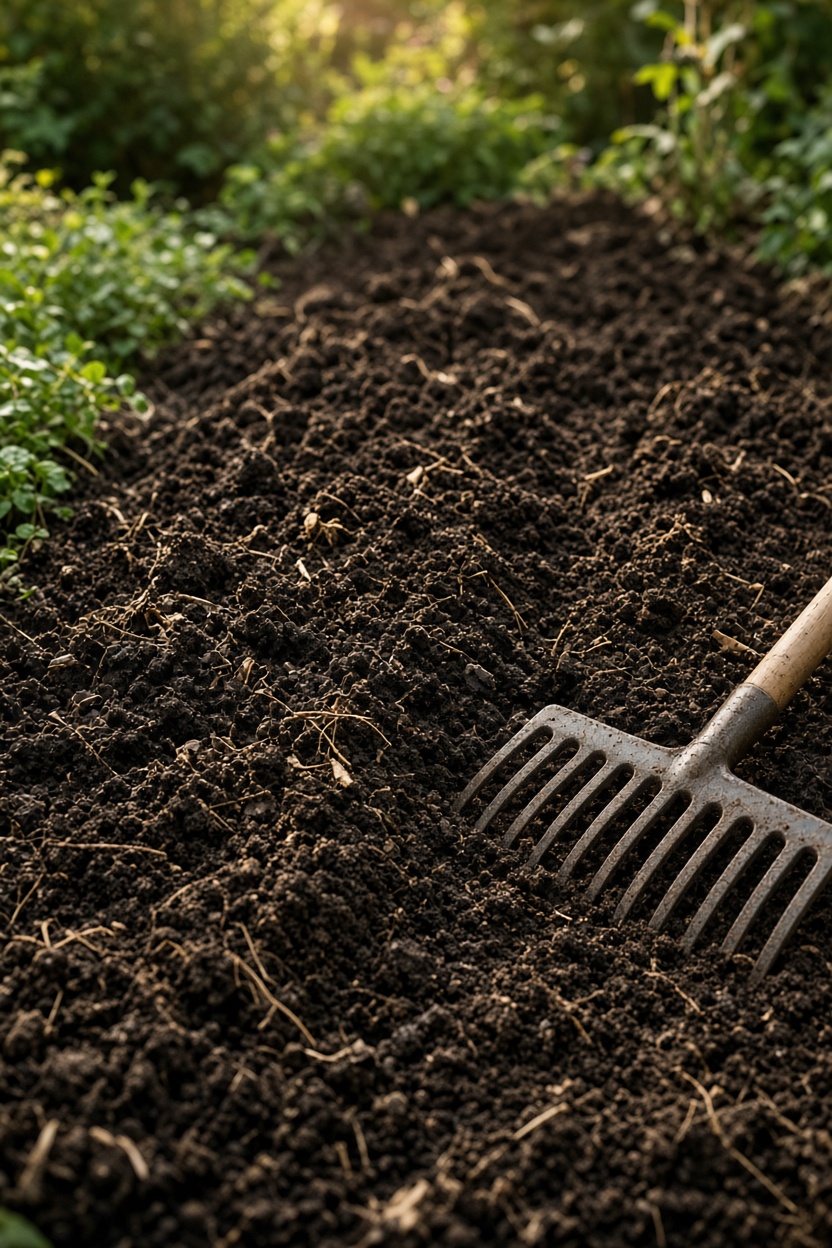
The soil type of your garden can very from a sandy soil tilth to a heavy clay base tilth, or a varied mixture of the two. Knowing the type of soil found in your garden will help you to properly prepare your garden's soil for planting crops. The color of soil from your garden can provide useful information about quality of the tilth. A general rule of thumb is the darker the color the healthier the soil. The color of your soil is determined, not so surprisingly, by what is in the soil. There are three main particles that constitute the soil found in your garden: sand, silt, clay.
Sand is the largest particle in soil. It is a very rough particle containing jagged edges. Sand does not hold nutrients or water very well. Silt is the middle-sized soil particle. Silt feels smooth and powdery to the touch. Clay is the smallest of the soil particles. Clay is smooth when dry but becomes sticky when wet. Clay can hold a lot of nutrients and water, but the structure of clay does not allow air and water move through it very efficiently. Most of the water in soils containing high amounts of clay is so tightly bound to the clay particles that plants have a hard time utilizing the water.
To be healthy, a soil needs to be able to breath, and water needs to be able to flow through it freely. Soils comprised of too much clay become compacted and does not allow air to reach the roots. Also, a soil high in clay content can become so dense that water is not allowed to be absorbed by the soil. On the other hand, if your soil is loosely compacted, the soil will absorb and retain water, releasing it slowly into the roots of the plant as needed. Loosely compacted soil also allows the roots of plants to breath efficiently.
Regardless of the type of soil found in your garden, soil conditions can be greatly improved by adding organic matter before tilling your garden each spring. Without adding fresh organic matter from time to time, the soil of any garden becomes deficient in key nutrients and crop yields will suffer.
If your soil contains heavy clay, the addition of organic matter will keep the clay from sticking together into large clumps after plowing. Thus, giving your soil the desired loosely compacted structure, promoting better root development and over all healthier crops. If your soil contains too much sand, the addition of organic matter will provide your soil the needed tilth. This tilth helps sandy soil retain water that would otherwise wash away, and encourages beneficial microbial to provide the nutrients needed for your crops to grow.
When adding organic matter to soil, make sure to add enough to physically change the structure of the soil. Especially in heavy clay environments, at least one third of your soil mixture should be some type of added organic material. To achieve this result, before plowing your garden in the spring, spread 2 to 4 inches of organic matter on top of your garden plot and till it to a depth of 6 to 10 inches.
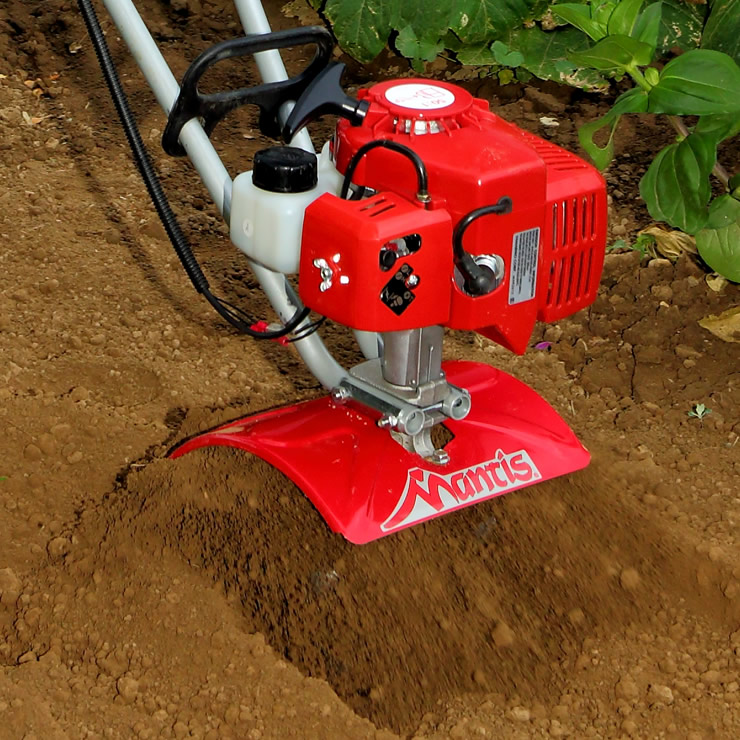
When it comes to the actual tilling or plowing of your garden, some gardeners prefer to use a shovel or spading fork to a rototiller. I choose the easier of these methods and use the rototiller for this chore. If you decide to use rototiller, here are some tips to make the tilling job much easier.
Leaving an untilled row between passes allows for wide turns and makes it easier to swing the tiller around.
If the soil in your garden consists of heavy clay, or you are breaking ground for a new garden, reducing the tiller's engine speed will help prevent your tiller from bouncing as much.
When tilling ground for the first time, do not try to till the soil to the maximum depth in a single pass; use multiple passes instead. On the first pass, set the brake stake to half the desired depth. Then by using a second pass, set the brake stake to the full desired depth.
Till only when the soil is slightly wet. Tilling when the soil is too wet will leaves large clods which become rock-hard when dried by the sun. Likewise, tilling when the soil is too dry is kind of like trying to till concert.
While tilling may not be the most glamorous part of growing your own garden, it clearly is a very important step that should not be overlooked or rushed through. By adding the adequate amount of organic material to your garden's soil each year, and by following these time tested procedures for soil preparation; all of your hard work, wrestling with that rototiller, will pay off in the late summer and early fall as you sit back and enjoy the "vegetables of your labors".
<?xml version="1.0" encoding="UTF-8" standalone="yes"?>
<a:clrMap xmlns:a="http://schemas.openxmlformats.org/drawingml/2006/main" bg1="lt1" tx1="dk1" bg2="lt2" tx2="dk2" accent1="accent1" accent2="accent2" accent3="accent3" accent4="accent4" accent5="accent5" accent6="accent6" hlink="hlink" folHlink="folHlink"/>
“The darker the color the healthier the soil.”
Soil Preparation
Soil particle triangle (conceptual)
Sand, silt, and clay govern drainage, nutrient holding, and root breathability.