Issue 06 · One essay
Other Organic Fertilizers
Compost, cornmeal, lava sand, and the quieter tools that rebuild living soil.
Other Organic Fertilizers Besides Chemical fertilizers and manure, there are other items that can be added to your garden to help give plants the nutrients they need to grow. In this article, we will discuss several organic alternatives to commercial fertilizers that may be used in your home garden.
“Humus increases the soil’s capacity for retaining water and nutrients for plant consumption.”
Other Organic Fertilizers
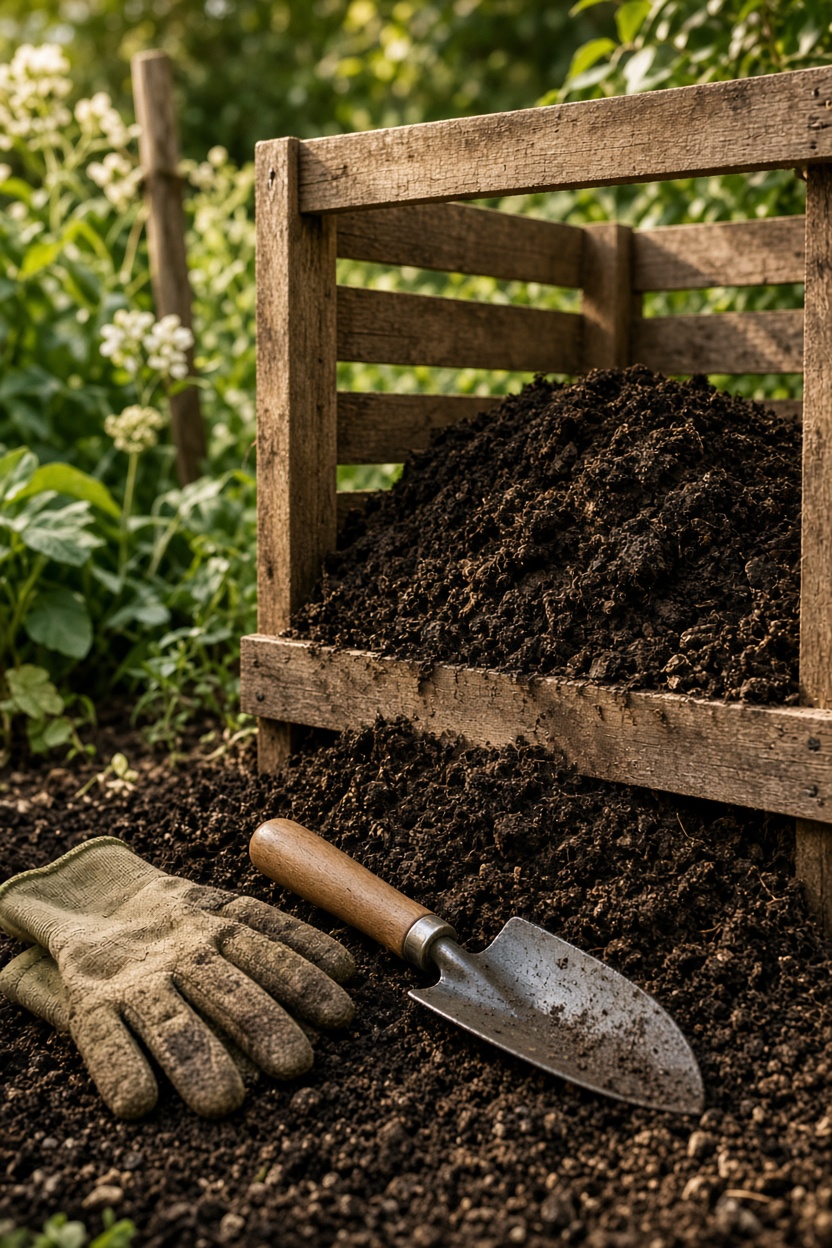
Compost The most common non-fertilizer soil additive is compost. Compost is a combination of organic material from plants and animals that is being decomposed into dark rich soil. Compost soil is beneficial for gardens in many ways: as a soil conditioner, a fertilizer to add humus and humic acids, and as a natural pesticide. Humus refers to organic matter in soil that has reached a point of stability, where it will break down no further. The addition of humus to soil will increase the soils capacity of retaining water and nutrients for plant consumption.
Cornmeal Cornmeal can be used as a very mild fertilizer, fungicide, and disease fighter. It is very safe to use on all plants without fear of fertilizer burn. It is an excellent organic treatment that can be used to help restore soil to a healthy condition.
Lava Sand Lava sand comes from crushed lava rocks produced by volcanoes and can be applied into the soil in high quantities without fear of fertilizer burn. Lava rocks are loaded with all the essential nutrients that plants need for growth.
Greensand Mined from ancient sea beds, greensand is a marine deposit that is loaded with iron and many other nutrients. It should not put used on soils that already have a high iron level, as it will further raise the iron content of the soil.
Dry Molasses Dry molasses is the name for a product made from organic materials, like rice hull bits, that have been sprayed with molasses and then dried. Dry molasses is a powerful carbon source and will greatly increase the bacterial activity in the soil.
Lime As discussed earlier, when most nitrogen based fertilizers are applied to soil they break down into ammonium. Ammonium is a chemical compound made up of 3 nitrogen atoms and 3 hydrogen atoms. When the ammonium comes in contact with the soil over time it is converted to nitrate by the bacteria in the soil; the warmer the soil, the faster this conversion happens.
As the ammonium is being converted to nitrate, it loses 3 hydrogen atoms and gains 2 oxygen atoms. The oxygen is taken from the air in the soil, while the hydrogen atoms remain unattached in the soil. The amount of these unattached hydrogen atoms determine the pH factor of the soil. The more hydrogen atoms in the soil, the more acidic the soil becomes. As mentioned before, most plants prefer a slightly acidic soil containing a pH factor between 5 and 6.5. The excess Hydrogen in acidic soils can tie up nutrients and organisms in the soil. As such, if too many hydrogen atoms are present in the soil, plant health will be affected.
Hydrogen atoms are attracted to water molecules, as such excess hydrogen is generally removed from the soil through proper water drainage. If soil pH levels still remain acidic, lime can be used to lower the acidic level of the soil, raising the pH factor.
When lime (calcium carbonate) is added to the soil, the hydrogen atoms in the soil react with the lime creating water and carbon dioxide. This conversion process neutralizes the acid in the soil thus raising the pH factor. Some soils naturally have the ability to cope with the excess hydrogen atoms better then others. Soils naturally containing large quantities of lime, or soils that have a lot of organic matter and clay, to bind the hydrogen, will have the ability to buffer the hydrogen atoms and maintain a healthy pH factor. On the other hand, soils containing lower amounts of lime clays and organic matter will have diminished capacity to buffer the excess hydrogen in the soil allow the hydrogen to build up in the water at a much quicker rate. Once a soil has become acidic, it has lost its ability to bind or otherwise neutralize hydrogen atoms. Soils in this state will tend to become even more acidic at an increasing rate. Adding additional ammonium or urea based fertilizers to soil in this state will only further exacerbate the issue, since the ammonium in the fertilizer will add additional hydrogen to the soil as it is converted to nitrate. When adding lime to soil, caution must be taken. Lime is not a fertilizer but rather adjusts changed the chemistry of the soil. Too much lime will raise the pH factor of the soil to an undesirable level, and keep it at that level until the lime has been utilized. In addition excess lime can create boron deficiency. Make certain you know how much lime is needed, then apply it over a number of seasons until your soil is back in balance. Bone meal Bone meal is a mixture of crushed and coarsely ground bones that is used as an organic fertilizer for plants. Bone meal is a slow-release fertilizer primarily used as a source of phosphorus, although finely ground bone meal may provide quicker release than coarsely ground.
Bone meal contains a typical N-P-K ratio of 4-12-0, though some steamed bone meals have N-P-K of 1-13-0. Bone meal is also an excellent organic source of calcium for plants. Phosphates do not easily pass through soil. So mixing the bone meal with the soil or putting it in the planting hole can help. Bone meal is frequently used in preparing holes for blooming bulbs, for the phosphorus. It may help tomato plants prevent blossom end rot, and increase tubular size in potatoes.
As with chemical fertilizers, care should be take so as not to add too much fertilizer to your soil. Even though high doses of these organic fertilizer may not cause immediate damage to you plans, all fertilizers will change your soils chemistry. If high doses are continually applied to your soil, in time you will notice an adverse change to the pH factor and sodium content of your soil. Until next time, keep those thumbs green.