Issue 05 · One essay
Animal Manure
Source matters, moisture matters, and poultry’s “white part” is urea riding along for the trip.
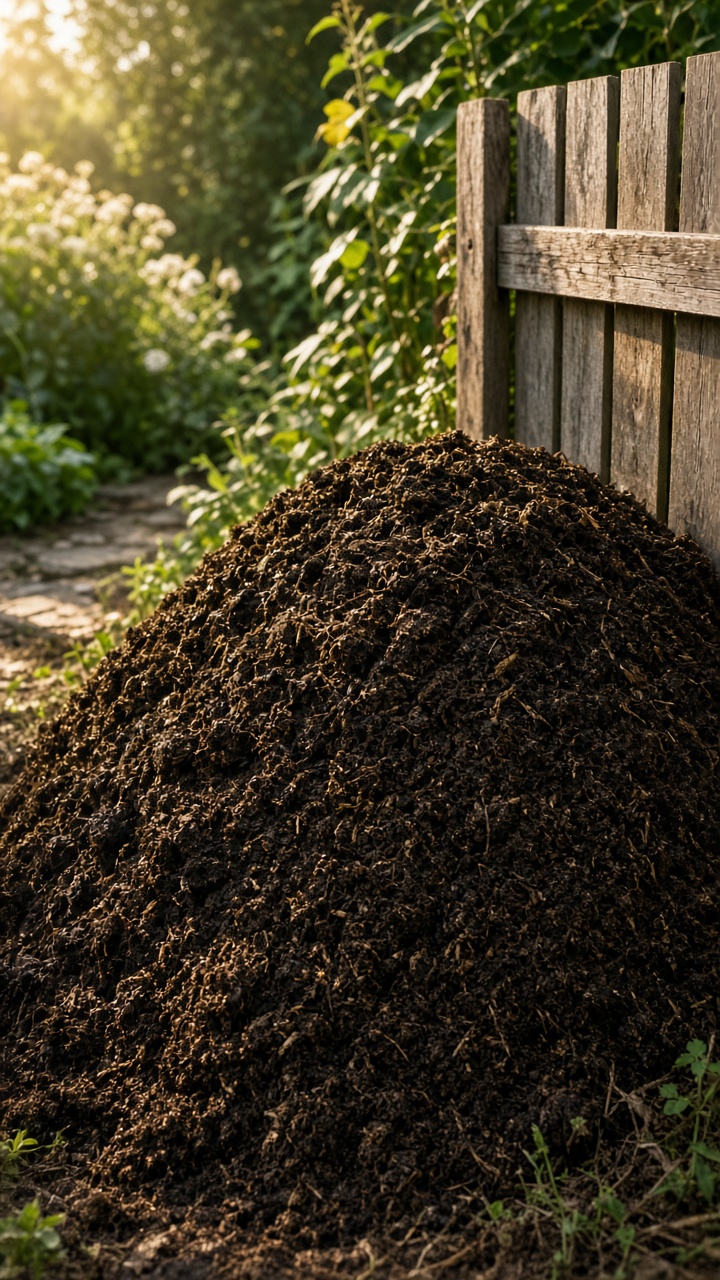
Manure Manure is the most commonly used organic fertilizer. Manure contains nitrogen, phosphorus, and potassium as well as many of the other micro nutrients needed by plants. In addition to these essential nutrients, manure also adds organic matter to the soil, helping to improve the soils structure, aeration, and ability to retrain moisture.
“The funny thing about the white part of chicken poop is… it’s chicken poop too.”
Animal Manure
To determine how much manure should be added to your garden, the nutrient content and rates at which the contained nutrients become water soluble must be estimated. In order to properly do this, we need to look at several characteristics of the manure, namely the source of manure and its moisture content. Let's take a moment to address these characteristics.
The first property of manure to consider is its source, or in other words what kind of animal it came from. The nitrogen levels in the manure differ greatly depending upon its source. For example, considering only common animals, poultry manure has the highest nitrogen total weight percentage at 0.9%. In comparison, bovine manure has a lower nitrogen total weight percent of only 0.5%. So what causes the difference in nitrogen levels between bovine and poultry manure?
As mentioned in my previous article, What Are Fertilizers?, urea is the most common source of nitrogen found in fertilizers, and is naturally accruing in animal urine. Therefore the higher the urine content in the manure, the higher the nitrogen levels will be.
Most all mammals have two separate expulsion orifices; with one they defecate, and with the other they urinate. Birds, on the other hand, only posses one expulsion orifice, and therefore technically do not urinate. As such, their urea waist passes through their bowls and is excreted along with their feces. As my old man would say, "The funny thing about the white part of chicken poop is... it's chicken poop too."
The white portion of bird feces is actually the urea. Since the urea in poultry manure is a part of the manure, poultry manure has a higher nitrogen content. In bovine manure the urea is excreted separately from its feces, so as expected, the nitrogen level of bovine manure is lower.
The second property of manure to consider is its moister content. The moister content of fresh manure is typically between 70% and 85%, where the moister content of air dried manure is only about 9% to 15%. As manure dries, a chemical process occurs where the nutrients in the manure become concentrated on a weight and volume basis. So while wet manure may weigh more, dry manure of the same volume will contain higher nutrient levels.
The following cart shows some of the most common types of manure; it also contains a comparison between fresh and dried manure for each of the listed sources.
Nitrogen Phosphorus Potassium Calcium Magnesium Organic Matter Moisture Content FRESH MANURE % % % % % % % Bovine 0.5 0.3 0.5 0.3 0.1 16.7 81.3 Sheep 0.9 0.5 0.8 0.2 0.3 30.7 64.8 Poultry 0.9 0.5 0.8 0.4 0.2 30.7 64.8 Horse 0.5 0.3 0.6 0.3 0.12 7.0 68.8 Swine 0.6 0.5 0.4 0.2 0.03 15.5 77.6 DRIED MANURE % % % % % % % Bovine 2.0 1.5 2.2 2.9 0.7 69.9 7.9 Sheep 1.9 1.4 2.9 3.3 0.8 53.9 11.4 Poultry 4.5 2.7 1.4 2.9 0.6 58.6 9.2 Horse 1.9 1.5 2.3 2.9 0.6 39.5 8.1 Swine 2.1 1.4 2.1 2.6 0.2 40.2 9.8 Table SEQ Table \* ARABIC 1 Notice the inverse proportionalities between fresh and dried manure nutrient levels. In all listed cases, the nutrient and organic matter levels drastically increased as the moister of the manure was decreased.
The solubility state of the macro nutrients from dried manure is a process of time. As the manure is decomposed by the existing organic material of the soil, nitrate, orthophosphate, and potassium are released into the soil for plant absorption. Since the decomposition process is very gradual, manure is categorized as a “slow release” fertilizer; where as a chemical fertilizer would be categorized as a “quick release” fertilizer.
The slow releasing property of manure is one of its most beneficial qualities. This property extends the availability of stored nitrates and orthophosphates, and reduces nutrient loss due to leaching and volatilization. It's like taking a 24 hour time release cold pill. Instead of getting all of the pills medicine at once, a smaller but constant dose is released into your body throughout the entire 24 hour period. The gradual release of medicine makes you feel better, without having to take additional pills throughout the day. Likewise, manure releases a predictable amount of water soluble nutrients throughout of the course of a year. As such, we do not have to fertilize as often, and our plants will still have the nutrients they need to grow.
Therefore, if we are starting a new garden plot, enough manure should be added to meet the macro nutrient need for the entire first year. Then in subsequent years, small portions of manure will be required at the start of the year, to insure proper soil nutrient levels. At the end of the first year, the soil will still contain organic nutrients that have yet to be released from the manure. These extra nutrients, or "carry-over" nutrients, will be released during the upcoming year. Consequently, in subsequent years we should decrease the amount of organic nutrients applied to the soil at the start of the year. If we were to continue to add organic nutrients at the levels we did the first year, the soil would quickly become excessively high in nutrients, and plant quality would begin to be adversely effected.
When looking at manure release rates, poultry manure is the fastest, releasing almost 90% of its available nitrogen and phosphorus within the first year. Fresh bovine manure isn't too far behind, releasing almost 75% of its available macro nutrient content within the first year. On the other hand, if we are looking for a more gradual release rate, dried bovine manure release only about 35% of its overall nitrogen and phosphorus the first year.
So if I am starting a new garden plot, I will want to insure I have proper nutrient level in the soil before I plant. Since the bulk of the nutrient stores become available during the first year, I would be wise to use either poultry manure or fresh bovine manure. On the other hand, if I am applying manure to an existing garden plot, the soil should retain some carry-over nutrients, so here it would be best to use the dried bovine manure.
Let's recap for a moment. The amount of manure that should be used depends upon: first - the manure source, second - the moister levels of the manure, third - where it’s going (new garden plot or existing garden). When choosing a manure source, care should be taken if poultry manure is selected. Poultry manure has a very high nitrogen content and becomes water soluble at a fast rate. Adding too much poultry manure to an existing garden or by adding poultry manure too close to tender plants, may cause nitrogen burn and damage or kill your crops. Remember, it is possible to have too much of a good thing.
Seeds In Manure Now before I make manure seam like the perfect fertilizer, I should warn you it is not without its flaws. The greatest disadvantage of using manure as a fertilizer is its notorious habit of transporting weed seeds into your garden. Since manure comes from animals and animals eat grass and weeds, weed and grass seed ends up in the manure. The digestive process of most animals does not consume the seeds. In fact, Mother Nature has specifically designed the digestive systems of herbivores to keep eaten seeds viable, allowing the animals to help spread the seed over a greater area in their feces. To help avoid adding these uninvited guests into your garden, manure can be composted. The composting process can help render any seeds the manure contains incapable of germination.
Another solution to seeds in manure is to use poultry manure. Since birds do not have teeth, seeds are broken down in their gizzards. Birds have a two part stomach, and one of these parts is known as the gizzard. A bird’s gizzard contains grains of sand and small rocks that have been swallowed by the bird. The rocks and sand act as a mill, grinding up the seeds eaten by the bird so they can be further digested by stomach enzymes and acid. As such, eaten seeds are broken down in the gizzard of the bird and will not end up in the bird’s feces; thus no extra weeds in your garden.
Soil Salt Levels Another negative side effect of using fertilizer in your garden can be an increase in the soils salt level. As we will discuss in an upcoming section, salt levels are crucial to plant growth. If you have too much or too little salt in your soil, plant health will suffer. Thus we need to be cognoscente of the salt level when adding fertilizers of any type to your garden.
All fertilizers come in a salt form and manure is no different. Manure on average contains about 4% to 10% percent soluble salts. Therefore, if we add the recommended 7 tons of manure to a 1 acre field, and that manure contained 5% of its dry weight base as soluble salts, then we are also adding 1,200 lbs. of salt to the soil. By looking at these numbers, it is easy to see how over fertilization can be detrimental to your plants. In most cases, if there is proper soil drainage, excessive soil salts will be leached from the soil before damage will occur.
The concept of fertilizers increasing soil salts brings to mind the concepts of proper soil maintenance. Do not under estimate the importance of proper soil drainage and the importance of watering the soil shortly after top or sidedressing has been applied.
pH Factor The final negative side effect of using fertilizer we will discuss is micronutrient deficiencies. The application of fertilizers can cause or increase micronutrient deficiency in soil, especially in sandy soils. Most soil nutrient deficiencies occur when the soils pH factor become too high or too low. But what exactly is pH a measurement of and how does it affect growing plants?
The pH factor, or “potential of hydrogen”, is a logarithmic measurement of the acidic or alkaline level of an item. The pH factor rates the substances in question from a 0, very acidic, to a 14, very alkaline or basic. Therefore if an item like distilled water, with a pH of 7, would be considered neutral, possessing neither acidic nor alkaline qualities. Since this is a logarithmic scale, a substance with a pH factor of 3 would be 10 times more acidic then a substance having a pH factor or 4. The pH factor of soil will either help or inhabit plants from absorbing nutrients. While a select few plants do require unusual pH levels, most plants grow best in a slightly acidic soil having a pH factor between 5 and 6.5.
Testing the pH factor of your garden’s soil is a very simple process which can be completed in just a few minute right in your own home. All that is needed to test your soil is some litmus paper, which can be purchased from almost any local pharmacy.
To get a soil sample from your garden, dig down about 6" deep and take about a ¼ cup of soil, placing it in to a Mason jar or small bowl. To get the overall pH level of your garden take several samples from different areas of your garden, or do each area of your garden separately to get the specific pH level of each area. Next, remove anything that is not soil from your container: roots, twigs, plant parts. Next, add enough distilled water to your soil sample(s) to create a very thin muddy mixture. Tap water should not be used since it is most likely acidic and therefore will skew your results. You can always test your tap water with the litmus paper first, and use your tap water if the pH factor is about a 7.
Now, stir the soil around until it is equally distributed in the water. Let the mud mixture sit until most of the soil has settled to the bottom of the container. Now take a strip of litmus paper and dip it in to the water on top of the mixture. Leave it in the water for about 10 seconds, then pull it out and compare the color of the litmus paper to the pH color chart that came with the litmus paper. This should give you a fairly accurate pH rating for your soil.
Conduct this test as often as you like to insure proper pH factor for your plants. In fact, by using this method, you can purposely cause different parts of your garden to have different pH levels for specific crops.
If you find your soils pH levels are too high or to low, read my article on Soil Deficiencies and my article on Other Organic Fertilizers for some ideas on how to adjust pH levels.
Manure is an excellent fertilizer for home gardens. It provides all of the nutrients that your plants will need to grow without the overwhelming concern of fertilizer burn. I hope that this article has better helped you to understand that old saying, “one mans poop is another mans gold mine.” Until next time, keep those thumbs green.
Nitrogen by manure source
Approximate total nitrogen by weight — poultry vs bovine (from the manure essay).
Manure moisture & nutrient density
As manure dries, nutrients concentrate on a weight basis.